
It is a capital mistake to theorise before one has data –
Sherlock Holmes
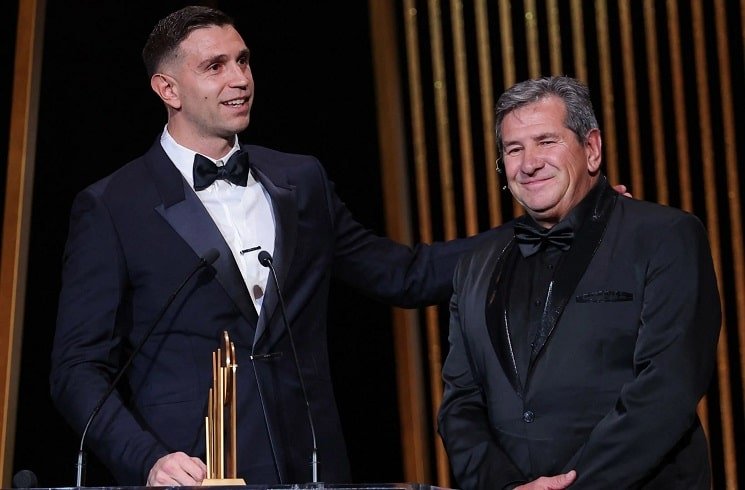
Picture this irony: In my earlier article, I expressed skepticism regarding the importance of the Yashin Trophy. Even before we could delve deeper into that conversation, the 2023 award recipient had a moment over the weekend that resembled a comical mishap reminiscent of a Laurel and Hardy comedy skit. He tried to execute a routine save but ended up creating a complete debacle.
This isn’t a matter of “unjust criticism” directed at Emiliano Martinez. We all make mistakes, and I’m well aware of this as a former goalkeeper. However, it sheds light on the inherent bias and unverified criteria used to determine award recipients. As I discussed in my previous blog post, the art of top-tier goalkeeping is at risk of shifting from a specialized position to a numbers-driven one. The absence of comprehensive goalkeeping analysis as a crucial tool in selecting winners for awards like the Golden Glove and Yashin Trophy is a disservice to the sport by its governing bodies. The negative consequences stemming from the present system lend unfortunate support to cases such as the recent mistake made by the supposedly “elected” world’s best goalkeeper, eroding the significance and trustworthiness of these awards. Do you remember what Martinez did with the Golden Glove Trophy he “earned” at the 2022 World Cup? He likely unconsciously diminished the significance of what the trophy symbolizes. I might come across as overcritical, but if the relevance and integrity of these awards must be upheld, then these issues must be discussed with openness and sincerity.
The Yashin Trophy
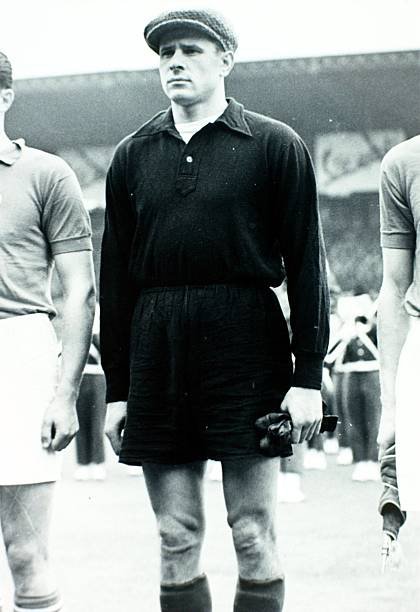
Let’s begin by exploring the origins of the Yashin Trophy, named after the renowned Soviet Union goalkeeper Lev Ivanovich Yashin, who displayed exceptional shot-stopping skills and played for Dynamo Moscow, amassing 326 appearances, and represented the USSR from 1954 to 1970. FIFA attributes to him the remarkable feats of saving 150 penalties and keeping 270 clean sheets during his career, although these statistics lack independent verification. He is also the only goalkeeper to have won the Ballon d’Or back in 1963. Interestingly, Wikipedia labels Yashin as “widely considered the greatest goalkeeper in the history of the sport,” though the sources or basis for this claim remain undisclosed.
Immediately what springs to mind are two pressing issues that cannot be overlooked:
- The quality or standard of football in the Soviet Union League between 1950 and 1970
- The quality and reliability of the fundamental database analytics provided by the Soviet Union League and FIFA between 1950 and 1970.
During this bygone era, which saw the inception of the first World Cup two decades earlier, the sport was still in its early stages with regard to technical knowledge, talent, team coordination, physical and mental conditioning, and numerous subjective approaches that continue to develop in today’s modern world. It’s accurate to assert that Yashin, during his active career, stood out as an exceptional goalkeeper primarily in comparison to the quality of his contemporaries and the football standards of that time. This was the same era in which the legendary Pele was revered as a wizard of the game for decades, yet he never clinched the Ballon d’Or, despite, as per FIFA records, amassing more than 1200 career goals. So, how could such an iconic figure in world football remain without this prestigious accolade? The explanation for this puzzle lies in the fact that the award, much like subsequent awards, was determined by a panel of selected judges who assessed a list of candidates based on prevailing popular opinions which are subjective and also of a political nature. This tradition has persisted for decades, and in today’s world, it carries even more significance due to its highly coveted and prestigious nature. This is a cause for concern because it can give rise to problematic issues such as deceit, corruption, group influence, politics, and favouritism among the selected judges and the shortlisted candidates.
Returning to the origins of the Yashin Trophy, its inception was primarily driven by the argument that Lev Yashin, the legendary goalkeeper, stands as the sole recipient of the Ballon d’Or among goalkeepers. When considering this argument, along with his numerous subsequent accolades, we may seek to evaluate the worth and significance of the award through a wealth of visuals and data presentations. Yashin, often hailed as the greatest goalkeeper in the history of the sport, presents a claim that may be considered somewhat ambiguous in today’s world. It’s worth noting that the Yashin Trophy was initially introduced in 1994 to recognize the best goalkeeper in World Cup tournaments but was later replaced by the FIFA World Cup Golden Glove. The Yashin Trophy was reintroduced in 2019 as an annual ceremony alongside the Ballon d’Or. However, a critical question arises regarding the intrinsic value of winning the Yashin Trophy.
To get a measure of perspective, we shift the focus to the world of basketball, where the NBA reigns as the pinnacle of the sport, and the iconic figure of Michael Jordan, celebrated for his unparalleled global influence, is noteworthy. Jordan’s impact on the game extended beyond his six championship rings, (it should be mentioned that Bill Russell from an earlier era, won 11 rings during his playing career) as it was his dominance on the court that truly captivated fans and players alike. Every aspiring player wanted to be like Michael Jordan and even in the modern era, Michael Jordan’s legacy remains influential. Notably, no specific award was established in his honor, reflecting the notion that sports should emphasize personal achievement benchmarks and the pursuit of becoming the best version of oneself rather than creating awards to idolize past athletes.
In the realm of football or soccer, there have been instances of unethical behavior among top officials entrusted with safeguarding the sport’s integrity. One may wonder how long it will be before FIFA or other governing bodies come up with further “inspired ideas,” potentially leading to the creation of awards like the “Lionel Messi Award” to honor the current “greatest footballer ever” due to his eight Ballon d’Or wins. The public’s perception of such awards and their purpose may evolve over time, potentially leading to questions about their authenticity and significance. The big question is.. what is the intrinsic value of the Yashin Trophy Award and its impact in the evolution in the art of goalkeeping?
Conclusion
If an accolade can elevate an individual to the pinnacle of recognition in their professional field based on a single remarkable achievement (such as Martinez’s last-minute save against France, which was decisive in clinching the World Cup for Argentina), then awards would be distributed liberally to those who have contributed similar or superior game-changing moments. This would imply that every goal scorer who nets the decisive goal in the World Cup or other significant tournaments should be considered for an award, aligning with the criteria exemplified by the Yashin Trophy. This approach relies on subjective judgments and emotional, speculative opinions from chosen judges, without the reliance on data analytics or statistical information.
In the computer technology sector, there’s a saying that goes, Garbage in Garbage out in reference to the act of feeding probing problematic information into a computer to get an alternative, more refined and robust solution. The computer will produce the answers according to the quality of information its fed and the same analogy applies to the Yashin Trophy Award and any subsequent awards. If one feeds the criteria of selection with incomplete information, what one gets is an incomplete result presented as the “winner” which by all means does nothing but helps to undermine its intrinsic value and the evolution of goalkeeping.
You Are The Ultimate Keeper Of Your Destiny
ULTIMATE KEEPER
 KEEPERS KORNER