
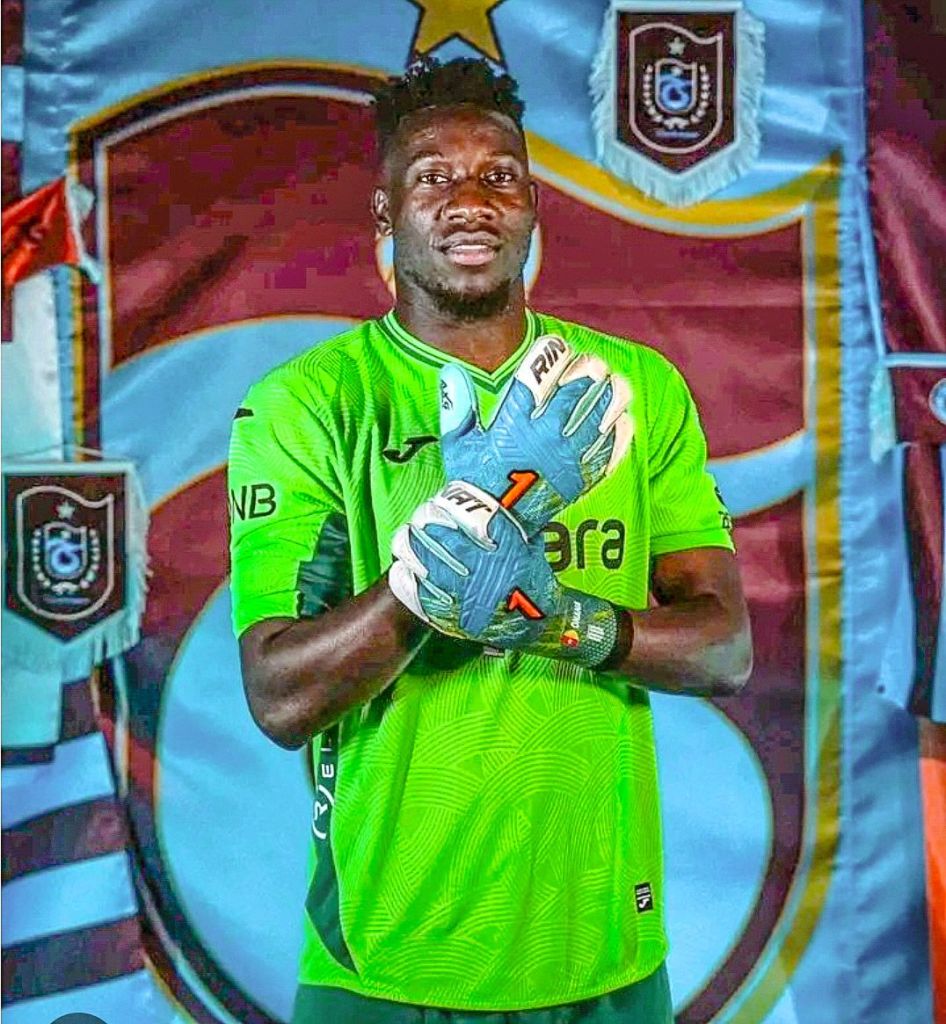
A bold editorial headline could easily be interpreted either as an exaggerated response to current realities or as a damning verdict on the failure to meet expectations of setting a new benchmark in goalkeeping excellence. When André Onana signed a lucrative five-year contract with Manchester United for the 2023–2024 season, he was expected to embody the latter — the goalkeeper to redefine standards after David De Gea’s departure. Yet, two seasons on, the optimism surrounding his arrival has largely given way to frustration, doubts over competence, and widespread disillusionment among Manchester United supporters, pundits, and fans regarding his standing as an elite goalkeeper.
Erik ten Hag, the former Manchester United manager, brought André Onana to Old Trafford on the strength of their successful partnership at Ajax, convinced that the goalkeeper would become a cornerstone in his bid to build a title-winning side and restore the club’s long-lost aura of dominance. Yet the reality proved far more daunting. Ten Hag’s tactical blueprint struggled to take root, leading to a disjointed dressing room and high-profile players falling short of their potential.
Onana, in particular, endured a turbulent start. His debut campaign inscribed an unwanted mark in United’s history books, as he became the first goalkeeper in the modern era to concede over 58 goals in a single season. While his second year showed a modest improvement—shipping 44 goals—his performances remained riddled with costly errors in decisive matches, leaving many unconvinced of his credentials as United’s long-term number one. The inevitable came when Ten Hag was dismissed. As I noted in my earlier editorial The Waning Hope, such a departure would almost certainly pave the way for Onana’s replacement by a new manager’s preferred choice. And now, true to prediction, that moment has arrived. So, now the inevitable question is..
Where exactly did it unravel for André Onana? The English Premier League, with its relentless pace, unforgiving pressure, and an audience that demands nothing short of excellence, was never going to offer him an easy passage. Every decision, every touch, every mistake—magnified under the spotlight, dissected from every conceivable angle. Speculation has naturally followed in abundance, each perspective attempting to explain his struggles, though few truly capture the full picture. As a former semi-professional goalkeeper myself, I view Onana’s trajectory through a different lens. In my estimation, three key areas demand closer and deeper analysis namely:
- His level and quality of goalkeeping skillsets abilities
- His relationship with the Manchester United goalkeeping coaching staff
- His relationship with his PR and career management team.
André Onana’s skillset abilities
This is undoubtedly a sensitive subject, as no two goalkeepers are alike. While certain traits may appear similar across individuals, the essence of goalkeeping lies in uncompromising attention to the fundamentals, with continuous revision and refinement of the craft. In studying André Onana as a case study of the modern elite goalkeeper, I examined his set positioning, lateral movement, recovery speed, positional awareness relative to his goal, his ability to shape perception among teammates and opponents, the influence of the crowd, as well as his agility, reflexes, anticipation, intuition, sense of responsibility, and vitality. What I found, however, was a professional goalkeeper who, in my view, does not embody the natural qualities required to be classified as a truly elite goalkeeper.
In today’s footballing landscape, where mediocrity is too often mistaken for excellence, my observations may strike some as unconventional—even provocative. Yet, when measured against the true standard of consistency required at the highest level of goalkeeping, the reality is clear: statistically, André Onana has fallen short, and this has hindered his progression toward genuine elite status. To illustrate this point, I will present two video clips—one showcasing his standout performances, the other exposing critical errors—to draw a stark contrast between perception and the reality of what defines an elite goalkeeper.
The video above showcases the best compilation of saves Onana produced during his first two seasons in the Premier League. While there are other notable stops, many of those fall into the category of routine saves, ones that any top-level goalkeeper is expected to make consistently.
The video above presents a compilation of errors made within the same period. While there are many other instances where his mistakes are far more subtle, noticeable only to trained goalkeeping analysts, these particular clips stand out clearly, even to the average viewer of the game.
Based on the contrast between these two compilations, together with additional but undocumented instances, on face value, it becomes increasingly difficult to argue in favour of Onana possessing the hallmarks of an elite goalkeeper. His standout saves, while notable, are heavily outweighed by the volume and impact of his errors, ultimately rendering him more of a liability than an asset to Manchester United.
Relationship with the Goalkeeping Coaching staff
A profound understanding of human anatomy and its limits within the demands of elite-level sport is an ongoing, lifelong education. Yet true mastery extends beyond the physical; it requires a transcendence into the spiritual, where qualifications, influence, and societal status alone prove insufficient to fulfil one’s role to its fullest potential. Goalkeeping coaches are no exception to this journey. Much has been discussed about the intrinsic value they bring, not only in shaping technical ability, but in guiding the deeper development of the goalkeepers under their care.
We may never fully understand the inner dynamics between André Onana and Manchester United’s goalkeeping coaches, but what is clear is that their influence played a significant role in the trajectory that ultimately saw him loaned out for a season to Turkish side Trabzonspor. United invested heavily in a goalkeeper they believed would not only serve as their long-term number one but also seamlessly integrate into Erik ten Hag’s tactical vision, one intended to transform the team.
In my view, the goalkeeping staff fell short of their responsibilities, either through a lack of holistic, in-depth knowledge of what was truly required, or because the working relationship never developed to the depth needed to meet those demands. The result was evident on the pitch: Onana’s inconsistency became a recurring theme, leaving fans perpetually on edge, bracing themselves for the possibility of yet another fumble or catastrophic error. From my analytical yet critical assessment, it was evident that Onana required significant improvement in several key areas, his movement, agility, alertness, image awareness, and above all, his sense of responsibility as a leader. These shortcomings left him vulnerable to recurring errors. What remains difficult to comprehend is how Manchester United’s goalkeeping coaches failed to recognise and address these issues in their training approach. That, however, is the reality of the situation, and ultimately, it explains why the transfer became inevitable.
Relationship with his PR and Career Management Team
For any elite professional, the presence of a dynamic PR and career management team is essential to shaping a successful career. Such a team must not only attend to the client’s immediate needs but also anticipate potential pitfalls—whether in behaviour, actions, or circumstances—that could prove damaging in both the short and long term. When issues arise, they should be addressed swiftly and appropriately, and where matters fall outside the team’s expertise, outsourcing to specialised professionals becomes imperative for proper handling.
André Onana, ever since his days at Ajax, has built a reputation for being strong-willed and outspoken. However, in recent times this has steered him into controversy, most notably a public spat with former teammate Nemanja Matić (who now plays for Lyon) ahead of a Europa League fixture against the French Ligue 1 Lyon last season.
This particular spat proved especially damaging for Onana, stemming from his earlier remarks in which he claimed Manchester United was superior to Lyon. Nemanja Matić’s response made it clear that Lyon was far from pleased, and he went further by casting doubt on Onana’s very goalkeeping credentials, a critique that cut deep. To Onana’s detriment, Matić’s words were vindicated when he committed a costly error in the ensuing match, which ended in a 2–2 draw. Throughout that game, it was evident that Onana was unsettled, his composure shaken, and his performance far from assured. Whether one believes Nemanja Matić was right or wrong in that public spat is not the central issue. What truly matters is the responsibility of Onana’s PR and career management team to shield their client from such scenarios, given the inevitable psychological impact. In today’s digital age, where social media amplifies every misstep and character assassination thrives through viral “memes,” the damage can be profound, fueling distorted perceptions that often bear little resemblance to reality.
Incidents like the one described could easily be dismissed as “typical rivalry mind games” that often accompany competitive sport. Yet the implications run far deeper when the psychological and even spiritual dimensions are taken into account. Depending on André Onana’s belief system, there is the risk that his subconscious could internalise these negative external narratives, subtly influencing his own perception of his abilities. In turn, this can manifest in his performances, reinforcing the very doubts projected onto him. His actions on the pitch then validate the collective perception, creating a self-fulfilling cycle. Without the right support system, guided by individuals in his PR and career management team with expertise in these areas, he risks being trapped in that loop, a path that could ultimately jeopardise the longevity of his career.
Conclusion
The headline “The Lost Hope” is not an indictment on André Onana’s goalkeeping career path, but rather as a reflection of a broader issue: the lingering perception, often subtle yet deeply damaging, that black goalkeepers are inherently less reliable. This stereotype dates back to my era in the late 1980s and throughout the 1990s as far as British football is concerned. While attitudes have gradually shifted since the turn of the millennium, the reality is that in today’s game, Onana remains the only black goalkeeper currently active in the Premier League. Step down into the Championship, and across its 24 teams, it is difficult to find a single black goalkeeper holding a consistent first-choice role.
Some may argue this is simply down to numbers, that the proportion of black goalkeepers emerging through the system is minute compared to outfield players. Yet I would counter that the footballing structure has not done enough to actively promote, support, and create pathways for young black goalkeepers. Greater efforts are needed to encourage participation, provide education, and open real opportunities for them to pioneer and shape the art of goalkeeping at the highest level. André Onana carried the weight of hope, the hope of challenging outdated perceptions and setting new standards so that goalkeeping could become a more attractive path for young black players, inspiring them to believe they too could reach the very highest level. Yet, being the sole representative under such intense scrutiny has turned into a monumental burden, especially without the right structures of support to help him truly embody that change.
Compounding this challenge is the modern reality of football economics. With lucrative contracts at astronomical levels, the hunger to continually refine and elevate one’s craft has, in many cases, diminished. It could be argued that too many elite athletes no longer prioritise the responsibility of being not only the best version of themselves, but also the standard-bearers for excellence. By contrast, the finest examples of this relentless pursuit of self-improvement come from basketball legends Michael Jordan and the late Kobe Bryant, athletes who competed daily against nothing less than the versions of themselves from yesterday.
Onana’s move to Trabzonspor always felt like an inevitability, though it brings me no satisfaction to admit it. I had genuinely high hopes for him at Manchester United. When I wrote my first piece, Goalkeeping 2.0 – The New Age, it was with excitement and optimism. Yet, in the two follow-up articles, my tone shifted as concerns emerged, about his technical skillset, his mental resilience under the relentless demands of the Premier League, and the looming likelihood of his replacement. Some may argue that this loan move is the best outcome, a chance to ease him away from the unforgiving spotlight. But the reality is grim: Onana joined United as their undisputed first-choice goalkeeper, and now finds himself on a year-long loan at Trabzonspor,a step down, perhaps even two depending on one’s measure of quality. In truth, he is now playing not to elevate his standing, but to salvage the rapidly declining intrinsic value he once held, the same value United paid a premium transfer fee to acquire. The fact that he is now been made aware he’s on the transfer list confirms as much.
As I conclude this editorial, I leave you with a thought. The great, iconic goalkeepers who helped shape the art of goalkeeping all wore the number one jersey, and they understood fully what that number symbolised: Leadership, Responsibility, and Respect. Any other number on a goalkeeper’s back traditionally signifies a deputy, and I say this with the utmost respect to every backup goalkeeper in the game. When personal preferences or sentimental attachments to alternative numbers take priority, it can project a self-centred mindset, one that, as we all know, is misaligned with the very essence of teamwork in sport. The truth is, being entrusted with the opportunity to step onto the pitch and showcase one’s abilities should be met with gratitude, humility and a feeling of responsibility.
Goalkeeping was never meant to be about the individual alone, it has always been, and will always be, about The Game.
The Final Destiny
ULTIMATE KEEPER
 KEEPERS KORNER